Table of Contents
- Headroom Free Elevators – Some Residential Options
- Guidelines For Selecting the Correct Head Room Free Elevator
- FAQs
- What vertical space is needed for a headroomless elevator?
- What about safety? Do they have safe headroom elevators?
- How much weight can a headroomless elevator support?
- Is it possible to place a headroom-free elevator in prebuilt homes?
- What is the price of a headroomless elevator?
- Are headroom-free elevators energy efficient?
- What maintenance is needed for headroom-free elevators?
- Can customization options be incorporated for an elevator with no headroom?
- What is the duration of installing the lift?
- Do headroom-free elevators work with multi story houses?
Space restrictions are often a headache when it comes to home elevators. Conventional lifts require a separate machine room or headroom, which can be impossible in some contemporary houses. Worry not—technology has advanced and now addresses headroom restrictions with a compact and efficient solution: the headroom-free elevator. This blog aims to cater to your needs for a headroom-less lift, a home lift with no headspace restriction, or any combination of both.
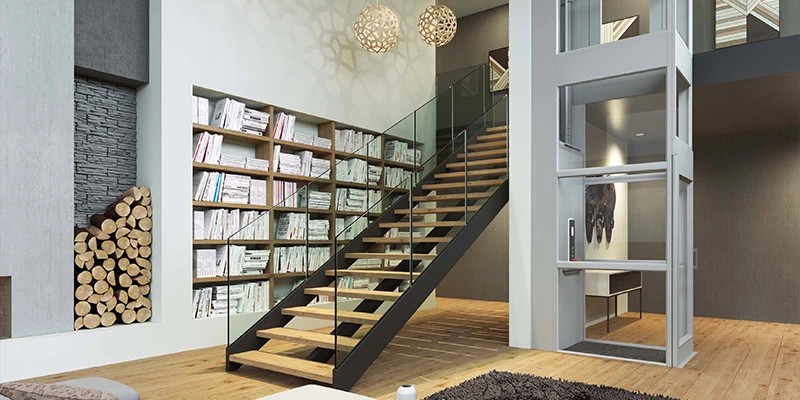
What is a Headroom free elevator?
A headroom-free elevator is a lift system that does not require a separate mechanical overhead space. Unlike conventional elevators, a no-headroom lift system increases efficiency without compromising sophistication, as it doesn’t need dedicated space for pulleys, motors, or other mechanically integrated components. These systems effortlessly blend into your home without compromising safety, efficiency, or style.
This type of elevator is especially helpful for homeowners seeking a smaller lift without headroom requirements, meaning it can be easily retrofitted into existing homes, apartments, and small residential areas.
Why Pick a No Headroom Lift?
There are clear reasons why a homeowner would prefer opting for an elevator without headroom and here are a few more reasons to consider:
1. Space-Saving Design
A headroomless residential lift is suitable for compact areas with no additional overhead space, which makes it a useful solution for residences that have height restrictions.
2. Seamless Integration
This type of lift does not require further structural changes, which means that it can easily be installed and would blend well with the existing design of the house.
3. Ideal for Retrofitting
No Separate headroom lifts can be installed into older homes without extensive renovation to the architectural structure, making them easier for homeowners to integrate into their homes.
4. Energy Efficiency
A no separate headroom lift system is ecofriendly with modern technology integrated into it that assures efficient power use.
5. Dependable and Efficient
Like the rest of our products, the headroom free elevators offer modern design and safety features which guarantee easy and safe use.
Headroom Free Elevators – Some Residential Options
A home lift without a dedicated space for headroom will not be as useful if you do not do prior research on the types of headroom-less residential lifts that are in stock. Some of the best options in the market include the following:
1. Hydraulic Headroom Free Elevators
This is one type of headroom-less hydraulic lift that operates through a hydraulic pistol mechanism. These lifts are specifically designed for larger residential spaces because of the increased comfort and ease with which they operate.
2. Pneumatic Headroom Free Elevators
Pneummatic lifts, also known as Vacuum lifts, use air pressure to facilitate access between floors. Because of their sophisticated design in which space is optimal, Pneumatic lifts are suited for space challenged houses.
3. Traction Headroom-Free Elevators
These are the true lift style elevators that come with their own set of pros and cons. Regular traction elevators demand an upper counterweight space but with the advancement of technology, there are now no separate headroom lift systems made with machine room-less (MRL) technology which do not require excess space.
Guidelines For Selecting the Correct Head Room Free Elevator
Listed below are some aspects to keep in mind before choosing a headroom-free elevator.
- Height Restrictions: Calculate the space in your house to figure out the optimal compact lift configuration without headroom.
- Weight Capacity: Each model differs in weight limits. Pick a headroomless home lift that would adequately manage your family’s requirements.
- Customization Options: Search for personalization options like cabin finishes, lighting solutions, and even door design features.
- Installation and Service: Ensure that the no separate headroom lift system you select offers decent after service for the installation.
FAQs
-
What vertical space is needed for a headroomless elevator?
Their footprint estimation is relatively smaller than that of a conventional elevator. The specific space depends on the lift’s model and structure, but these lifts have been tailored to accommodate restricted height housing.
-
What about safety? Do they have safe headroom elevators?
Yes. Headroom elevators are provided with safety emergency brakes, operating smooth and safe battery backup, automatic door locks, and so on.
-
How much weight can a headroomless elevator support?
The capacity is based on the type of lift. Pneumatic lifts normally have lower capacity, while hydraulic headroom-free elevators generally have higher weight capacities. It’s best to verify with the manufacturer for precise details.
-
Is it possible to place a headroom-free elevator in prebuilt homes?
Yes, easily retrofitting headroomless residential lifts into preexisting homes is one of their greatest benefits. There is no need for significant changes to the structures.
-
What is the price of a headroomless elevator?
The price of no separate headroom lift systems differs with customization, number of floors and home design. It is advisable to speak with a lift provider for the estimation.
-
Are headroom-free elevators energy efficient?
Newer technologies have been incorporated into the design of these lifts, which makes them far more economical than traditional elevators. Many designs also include energy saving features such as standby modes and LED lights.
-
What maintenance is needed for headroom-free elevators?
For proper servicing, some routine maintenance is required. Among fixed lifts, most headroom-free elevators need the least maintenance in comparison to standard lifts.
-
Can customization options be incorporated for an elevator with no headroom?
Yes, many compact lift designs without headroom offer customization options, such as the cabin interior, door finish, and control panel designs.
-
What is the duration of installing the lift?
While installation times differ, headroom-free elevators are typically faster to install compared to traditional lifts because of their compact design and no requirement for a machine room.
-
Do headroom-free elevators work with multi story houses?
Yes, these lifts are suitable for multi-level residences allowing easy vertical movement without any major structural changes.
